Back to works
Designing a comprehensive corporate system for managing a company's internal processes
Company:
NDA
Role:
Period:
2025 — 2026
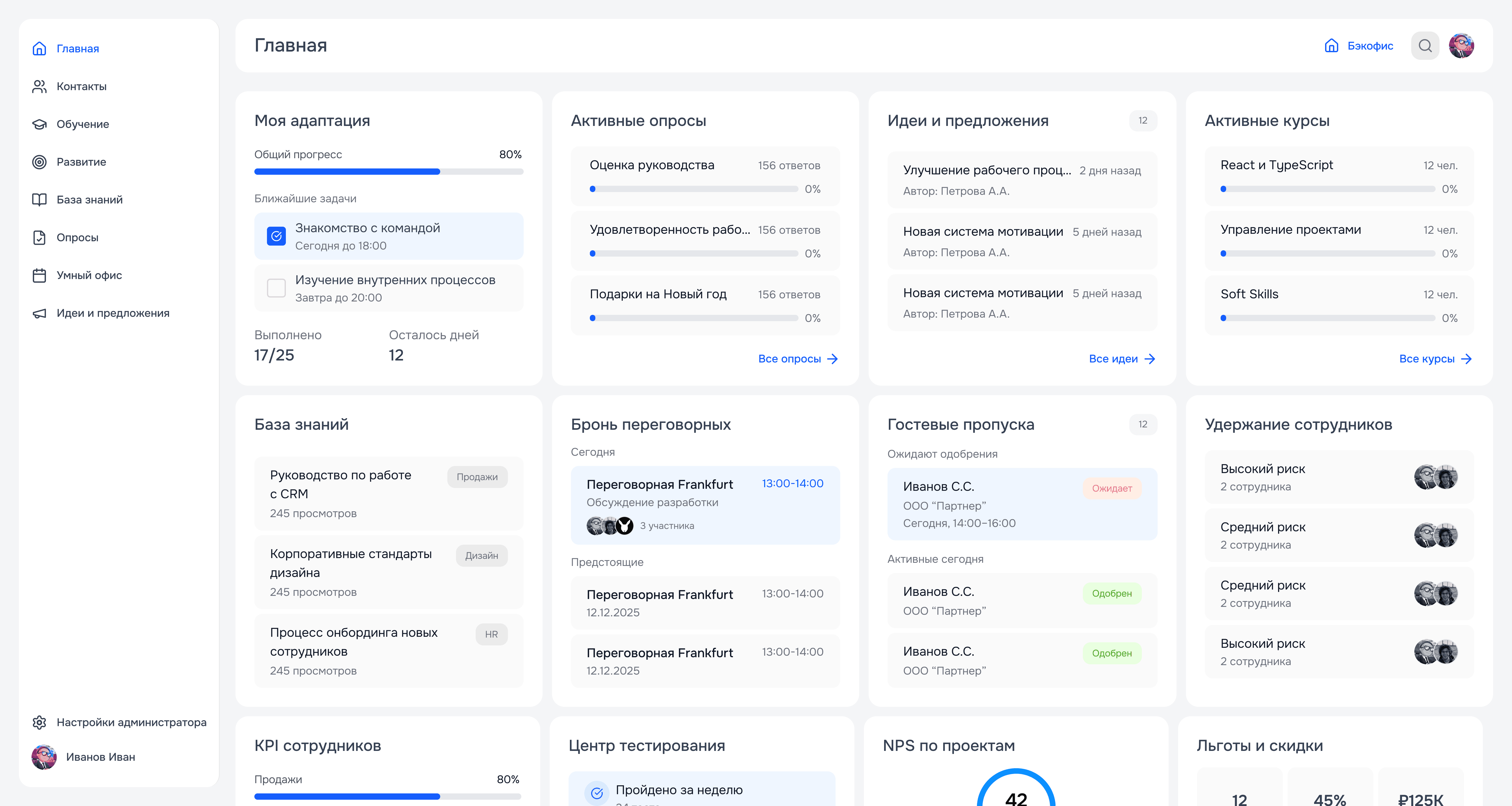
Project Overview
The project was developed for internal use within a corporate environment where established processes and tools were already in place.
This imposed certain constraints:
— it was not possible to simply replace all existing systems
— user habits had to be taken into account
— it was important to minimise resistance to change
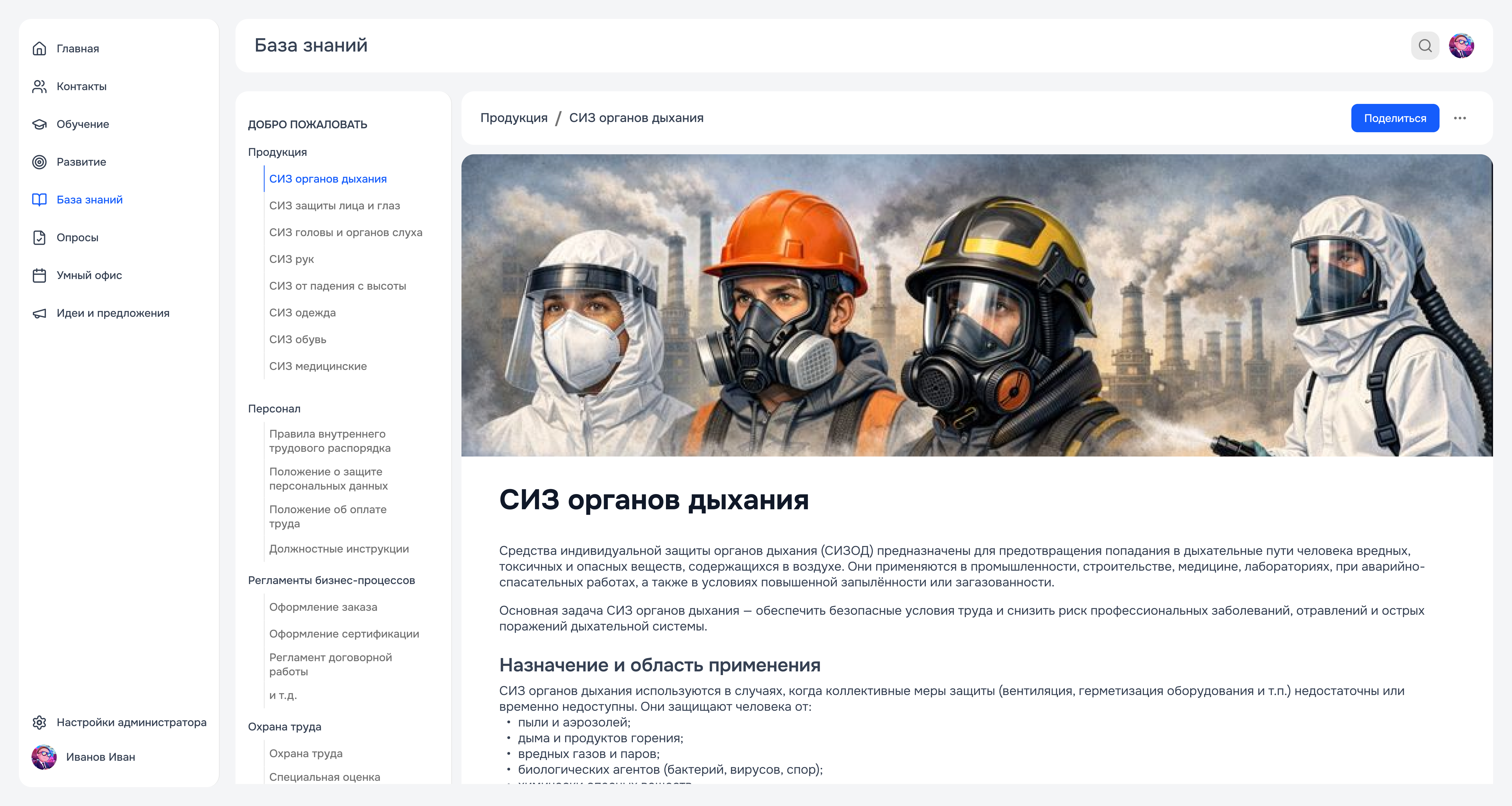
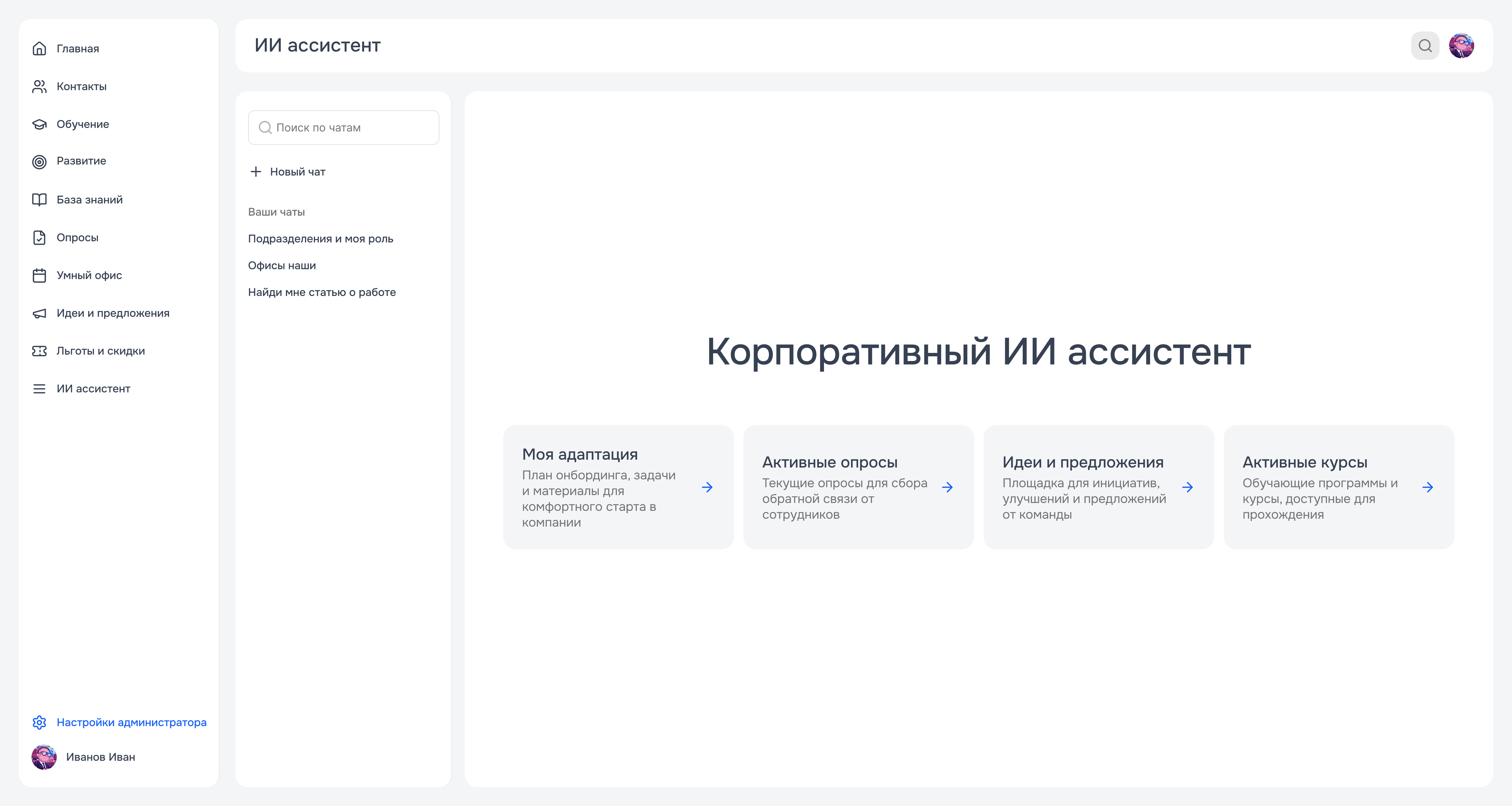
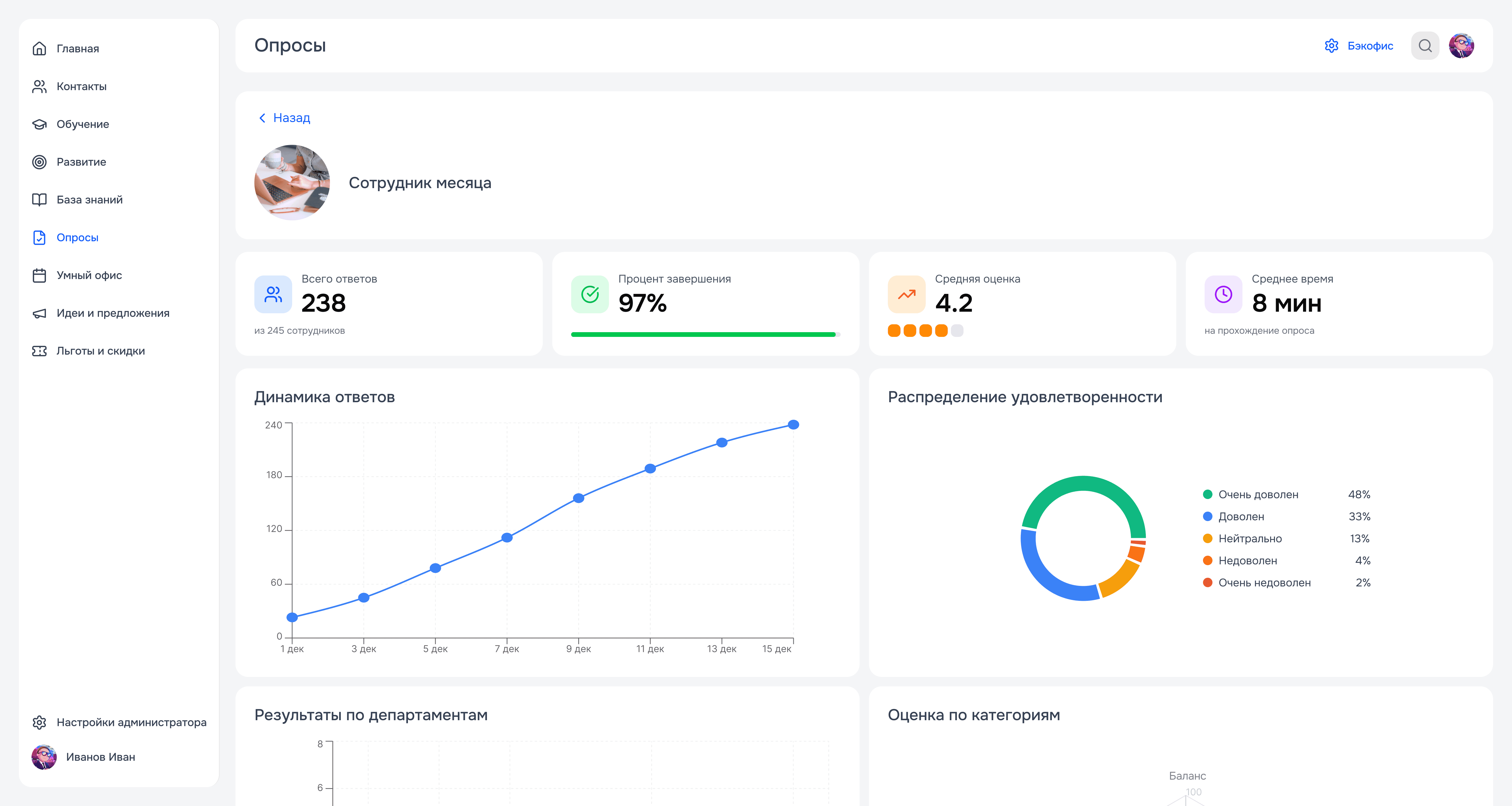
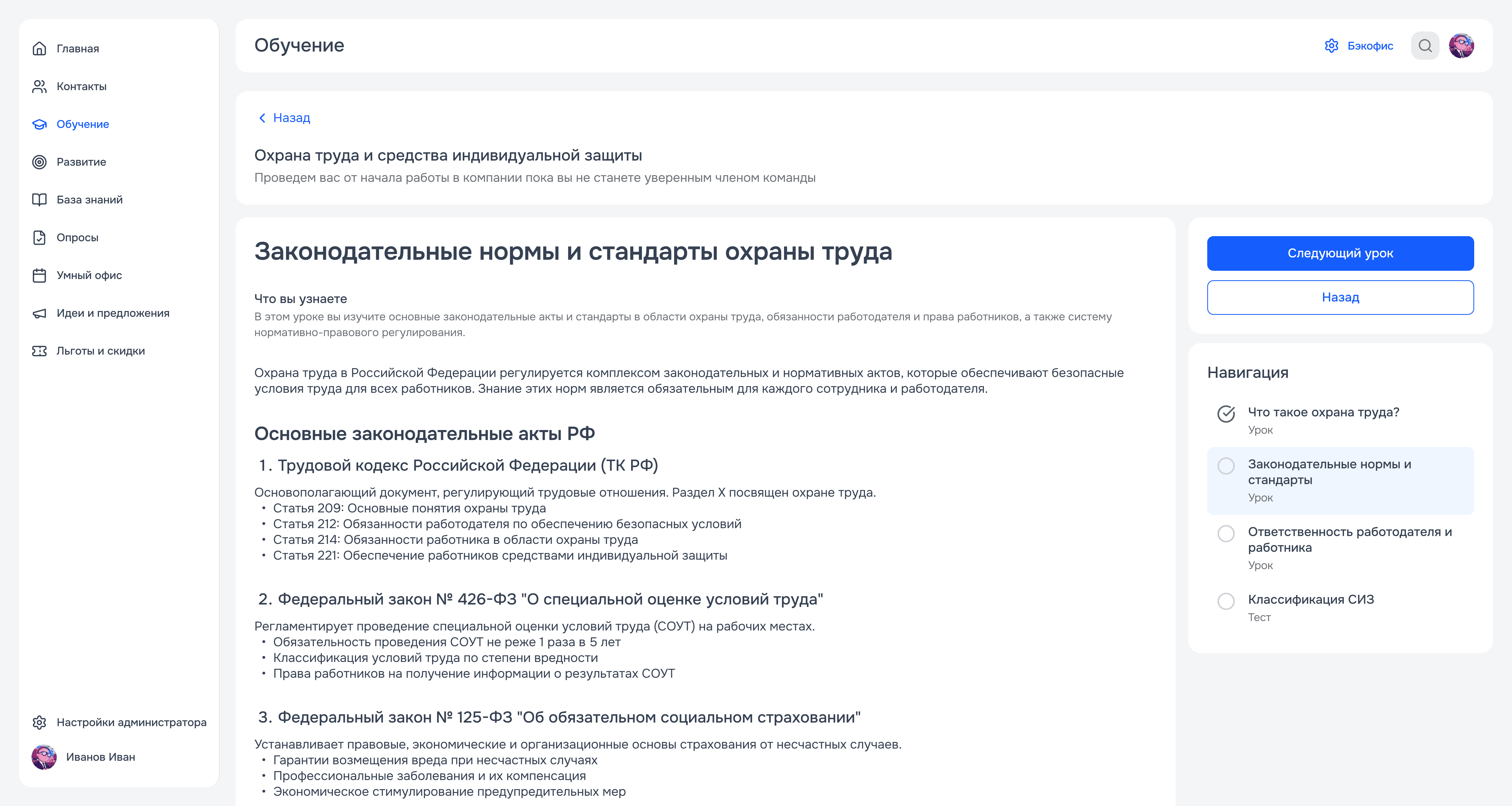
The system also had to be scalable to accommodate different employee roles and usage scenarios. The system integrates onboarding, training, 360° feedback, a knowledge base, and surveys into a single interface.
Problem
Employees at the company were forced to use several disparate systems to carry out their day-to-day tasks: training, communication and accessing corporate materials.
This created a fragmented user experience: users lost context, wasted time switching between tools and often did not know where to find the information they needed.
This had a particularly critical impact on new employees — onboarding took longer and created an additional cognitive load.
Solution
The key objective was to reduce fragmentation in the user experience and minimise the number of times users had to switch between systems.
Rather than simply combining all the functions in a linear fashion, I built the system around key user scenarios: training, accessing materials, and internal collaboration.
The interface was designed as a single point of entry where the user can:
— quickly access current tasks
— continue actions they have started
— avoid having to search for information across different tools
Results
1
Consolidation of 12 systems into a single platform with a unified user experience
2
Engagement in learning increased from 23% to 84%
3
The onboarding period for new employees has been reduced from 45 to 12 days
4
The NPS for employees regarding HR processes rose from 32 to 71
5
IT budget savings of 4.2 million rubles per year on system support
6
The time spent searching for information has been reduced by 65%